Team

Profile

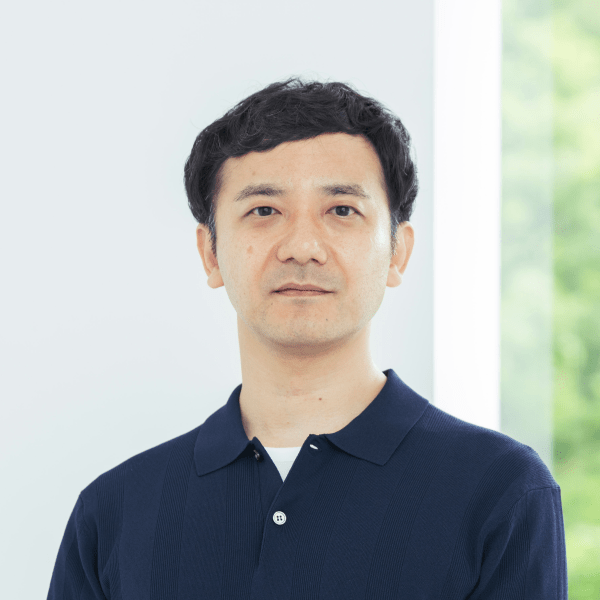
Tomohiro Nakano
Principal
After completing his graduate studies at Kyushu University’s Interdisciplinary Graduate School of Engineering Sciences, he joined Mazda as a new graduate in 2006, where he worked on product profitability management for the North American sedan (Mazda6). In 2009, he was seconded to a joint venture plant between Mazda and Ford in Michigan, where he handled cost planning and management as part of the corporate planning function. In 2012, he joined Salesforce Japan, where he was involved in the rapid growth of the SaaS business and organization in a Finance & Strategy role. In 2016, he joined TeamSpirit, a Salesforce portfolio company, where he handled a broad range of corporate functions as well as IPO and IR operations, and was appointed to the board of directors following the company’s listing. He joined Hacobu in 2021, serving as Executive Officer and Head of Corporate Management, overseeing corporate operations and governance development. He joined DNX Capital in 2022. He is a graduate of the University of Tokyo Executive Management Program (32nd cohort).
Interview

  • Meeting Founders Where They Are — And Staying With Them for the Long Haul
  • I Wanted to Keep Expanding What I Could Do With My Own Hands My career has taken me through genuinely different worlds — manufacturing at Mazda, global tech at Salesforce, and SaaS startups at TeamSpirit and Hacobu. At Mazda, I was the controller for the P&L of a North American sedan line. Working alongside people across many different departments to incrementally improve every number and every operation that fed into a product’s P&L — sales forecasts, manufacturing costs, investment, logistics, foreign exchange, accounting, tax — I learned management accounting not as a concept but as something embodied. I came to feel the real people and real work that live behind each number and each journal entry. That immersion in the dynamics of people, goods, and capital became a foundation for understanding diverse business models beyond software, and it continues to help me when I first sit down to make sense of a founder’s business model. Moving to Salesforce, I was struck immediately by how elegantly simple a SaaS P&L is compared to manufacturing. I worked on building and controlling business plans with an eye toward Wall Street consensus, running alongside the business as part of a global team. Joining a company that was defining a new category, and experiencing up close the discipline with which it operated, became a personal benchmark. I also came to believe that building a great SaaS company requires being a great SaaS user yourself. Having touched many of the world’s leading SaaS products as a user gives me a foundation for discussing product decisions and user experience directly with founders. After that, at a time when listed SaaS companies in Japan were still rare, I worked at pre- and post-IPO startups across every layer of corporate function — from execution through to management. Without that hands-on startup experience, I’m not sure I could have truly understood the startup mindset. And living through the tension of fiduciary duty as a participant and not an observer gave me something that continues to inform how I think about startup governance.
  • I Want to Feel the Problem, Not Just Analyze It Many of the founders I’ve had the privilege of backing since joining DNX are going after pain points that run deep within an industry. What I’m drawn to is not just market size or business model. It’s the depth of the pain in a given domain, and the weight of the founder’s commitment to addressing it. Founders who are changing the structure of an industry from the inside, with the perspective of someone who has actually lived in it, tend to capture my attention. As someone who spent years working inside operating companies, I can sometimes understand the structural problems within an industry — the dysfunction left unaddressed, the issues treated as just the way things are — from the perspective of a participant. That’s why, when I’m engaging with the problem a founder is taking on, I’m often less focused on evaluating it logically from the outside than on holding it up against my own experience and feeling for its contours. At the same time, I’ve been working alongside SaaS as an asset class for over ten years, and both the market and the technology environment keep shifting. Changes in foundational assumptions, AI above all, demand a constant re-examination and updating of my own hypotheses. I want to keep engaging with the specific, concrete customer pain that founders are facing in front of them right now, while also continuing to ask, in dialogue with founders, whether the premise of that pain still holds, and where the adjacent landscape is heading.
  • I Want to Be Someone Who Stays Close to Founders on the Long Journey Among the founders I’ve had the chance to invest in, many were working on problems that the market had barely noticed yet; challenges that looked unglamorous from the outside, quietly embedded in an industry. When a founder says to me “you’re the first investor I’ve met who actually understands what I’m trying to do,” that’s when I feel, most clearly, why I’m here. Being part of building a syndicate of co-investors before the spotlight arrives, and extending a sense of genuine belief in the founder out to potential customers and future team members. When that starts to work, I can feel the founder’s potential beginning to reach the world. There’s a particular joy I find in developing relationships that go beyond founder conversations, getting to the point where I can think through hard problems with front-line team members and outside collaborators, regardless of role or title. As someone who has faced the same questions from the execution layer inside a startup, I can sometimes bring the next problem into the room before it arrives: “this tension is going to surface next,” “tackle it in this order and the whole thing holds together.” Sharing that instinct and building something together — that time matters to me. Our relationships with the companies we back run long. And because they do, the value I bring to any founder isn’t something I can deliver alone. DNX is a team of people with genuinely different backgrounds, and what I can offer from my operating company experience is just one piece of that whole. I want to remain part of that team — and to keep contributing, in whatever small way I can, to the long journey each founder is on.