Team

Profile

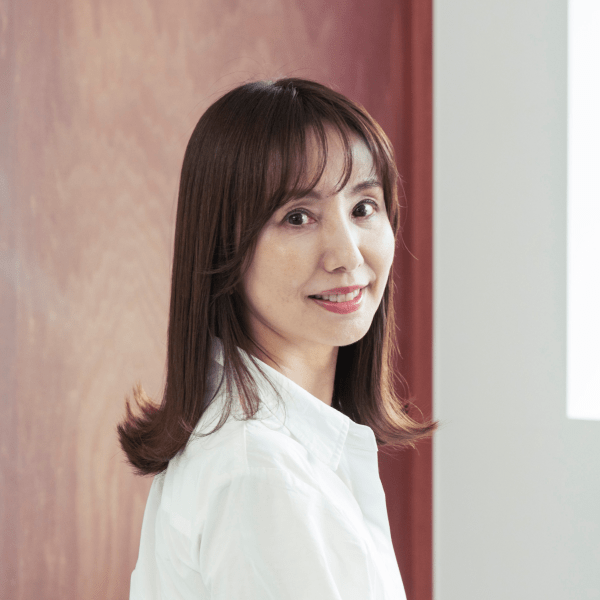
Masako Miyaoka
Executive Assistant
After graduating from a university in the United States, she worked as an assistant at Crédit Lyonnais (now Calyon). She then spent approximately 15 years in the Investment Banking Division of Goldman Sachs Japan, providing secretarial support to bankers including Managing Directors. In addition to schedule management and internal and external coordination, she gained broad experience that included mentoring new graduates. At Unison Capital, she worked as an assistant at a PE fund, expanding her range of responsibilities in an environment with close proximity to portfolio companies. She joined DNX Capital in 2024, where she serves as Executive Assistant, primarily supporting Kurabayashi.
Interview

  • Observe. Document. Anticipate. Building an environment where people can do their best work.
  • A Chance Encounter That Opened the Door to Finance — and a Career in Executive Support My career as an executive assistant began almost by accident. After graduating from university in the United States and returning to Japan, I found myself in an assistant role at a French bank — not because I had set out to become a secretary, but simply because that’s how things unfolded. I was happy in that role, surrounded by great colleagues, when a headhunter reached out one day. The opportunity was in the investment banking division at Goldman Sachs. I went on to spend roughly fifteen years there, supporting bankers including Managing Directors across the division. After that, following a stint supporting the investment team—including partners—at Unison Capital, I met Akira Kurabayashi when I interviewed at DNX, introduced by someone I had trusted since my Goldman days. I saw him as a person with a sharp eye for business beneath a gentle demeanor. The biggest deciding factor in joining, I felt, was being able to know without hesitation that I wanted to support Akira and the team.
  • Documentation as a Tool for the Future — Reading Ahead Through Observation My primary role at DNX is executive support for Akira. The one practice I’m most committed to is keeping thorough records: who met with whom, when, through which channel, and what was discussed. Nearly everything gets documented and reflected in Akira’s calendar. During my time at Goldman, I had an experience that brought home to me the importance of recording and preserving information—there was a point when I couldn’t accurately trace the history of past exchanges. Since then, I’ve made a point of recording when, with whom, and through which tool each exchange took place, so that anyone looking back later can grasp the background and the history of how things unfolded. The other thing I hold to is acting without waiting to be told. In practice, Akira rarely gives me specific instructions. When I joined, he even said something to the effect of, “I don’t have any particular requests — just do what you think is right.” So I observe. I imagine. I ask myself what would make things easier for the people around me, and then I move before anyone has to ask. That’s the approach I’ve come to call my own.
  • A Team You Can Be Honest With — and Room to Contribute More One of the things that genuinely surprised me when I joined DNX was the caliber of the team. I spent many years supporting people at Goldman Sachs, a firm generally regarded as an exceptionally high-performing environment — and yet the DNX team strikes me as a cut above. Each person handles a remarkably broad range of work outside their core area, and they do it with a consistency and composure I find rare. In all the time I’ve been here, I’ve never once seen someone let emotion cloud their judgment. What stands out even more, though, is the culture of honesty. At DNX, there’s a real openness — not just within the team, but in the way members interact with the founders of portfolio companies as well. The closeness of those relationships caught me off guard at first. But I’ve come to understand that it’s precisely because there’s no formal wall between people that everyone feels free to say what they actually think. If I’m being honest, I feel like I still have more to give. The team is so capable that there’s almost no gap left to fill — but I’d like to push a little further, find the spaces where I can take something off their plates, and make it just a bit easier for everyone to do the work they do best.